Robert Crawford on Haiku
Monday 28th September, 7.30pm
Topping & Company Booksellers of St Andrews, 7 Greyfriars Garden, St Andrews, Fife KY16 9HG
6.50pm
7.30pm
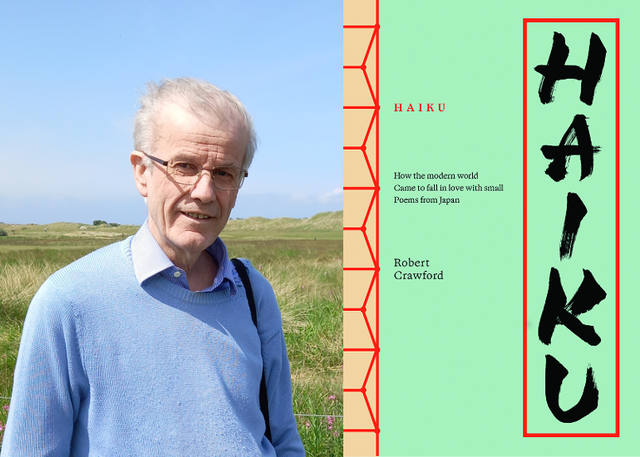
Robert Crawford on Haiku: How the modern world came to fall in love with small poems from Japan
If you were here for Robert Crawford's last event for Old World, you know that he's been experimenting recently with haiku. Despite Seamus Heaney dubbing it 'the pestilential form,' Crawford has found an epic, global journey, from Japan to every culture and language.
A century and a half ago, almost no one outside of Japan had heard of the haiku. Even in Tokyo some people regarded these tiny poems with disdain. Today they are the world's most widely known poetic form, cherished and reviled in equal measure. At their best, haiku are highly attentive to the moment and describe the world with pinpoint accuracy; at their worst, they can be trite and cloyingly cute.
How did these diminutive, seventeen-syllable poems come to pervade global culture?
Acclaimed poet and critic Robert Crawford charts the haiku's journey across the world, from Japan to nineteenth-century New Jersey, London, and California-and on to twenty-first-century Senegal and Brazil. We see the early experiments by contemporaries of Robert Louis Stevenson and Arthur Conan Doyle, grapple with Ezra Pound's modernist haiku, witness their transformation by Rabindranath Tagore and the Beat Generation, and newly appreciate the globalised, digital form we know today.
In Crawford's hands, the story of the haiku is the story of international literary exchange-and a resounding celebration of poetry and translation.
Robert Crawford is a poet, scholar, and emeritus professor of English at the University of St Andrews. Author of nine volumes of poetry and biographies of T. S. Eliot and Robert Burns, he is the recipient of the Saltire Scottish Book of the Year Award and several other prizes.