How Historians Know Shakespeare was Shakespeare with Susan Amussen
Tuesday 24th March, 7pm
Topping & Company Booksellers of Bath, York Street, Bath, Somerset BA1 1NG
6.30pm
7pm
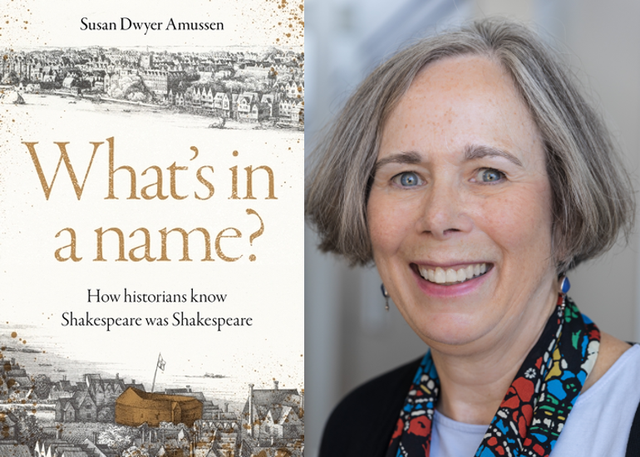
A compelling tour of Shakespeare's England that makes a powerful contribution to the 'authorship question'.
How do we know Shakespeare was Shakespeare? Could a glover's son who left school at fifteen really be the author behind Hamlet, King Lear and The Tempest?
Yes! says historian Susan Amussen. She transports readers back to early modern England, to travel the path that carried Shakespeare from humble origins in Stratford to literary greatness on the London stage. This was a society undergoing rapid change. Grammar schools made education in Latin and Greek available to commoners, while touring players brought the latest dramatic productions to the masses. And in London, a metropolis filled with European visitors, ordinary people had the opportunity to see courtly life up close.
No serious historian doubts that Shakespeare was the author of the plays that bear his name. Susan Amussen shares that Shakespeare's England was a complex and cosmopolitan place, with everything a talented young playwright needed to develop his craft and furnish his imagination.
'With precision, clarity, and infectious enthusiasm [Susan Amussen] lays out Shakespeare's world, in all its alien richness and half-familiar oddity, and leads us inescapably to the conclusion that the Stratford-born playwright and actor was the man so celebrated today. It's an act of scholarly service and artistic celebration, and a much-needed addition to the field.' Will Tosh of Straight Acting: The Many Queer Lives of William Shakespeare
Susan D. Amussen is Distinguished Professor of History at the University of California. She is the author of several books, including Gender, Culture and Politics in England, 1560-1603, co-written with David Underdown. While her primary work has been as a social historian focused on gender, race and class, her research has been used extensively by literary scholars.